October technical issue forced a U-turn over Ireland and a rapid 28,000ft descent back toward London Heathrow
6 October 2026Source: The Independent TravelOriginally: "British Airways sounds emergency alarm after rapid 28,000ft descent to London Heathrow"
What Changed
On 2026-10-06, a British Airways aircraft reportedly made a rapid 28,000ft descent after a technical issue while flying over Ireland. The aircraft turned back toward London Heathrow rather than continuing its journey, affecting international travellers booked on the service and potentially onward connections from Heathrow. British Airways has described the cause as a technical issue, but the specific fault, flight number, aircraft type, and total passenger count have not been confirmed in the available report. For travellers, the key practical impact is not only the interrupted flight itself, but also the possibility of rebooking delays, missed long-haul connections, baggage disruption, and eligibility for assistance or compensation depending on final arrival delay and circumstances.
Who It Affects
International travellers flying with British Airways through London Heathrow, especially passengers on the affected aircraft, those with same-day onward connections, travellers with checked baggage, and anyone meeting cruises, tours, visa appointments, business meetings, or time-sensitive onward transport after arrival.
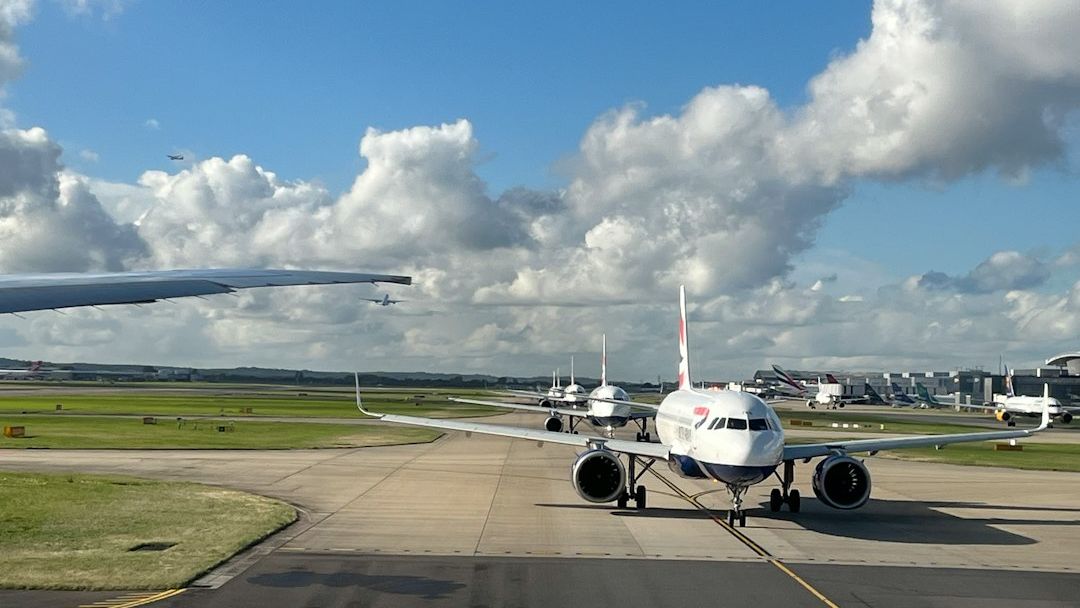
A British Airways aircraft returned to Heathrow after a technical issue triggered a rapid 28,000ft descent over Ireland.
British Airways passengers faced a major mid-air disruption on 2026-10-06 after an aircraft reportedly made a rapid 28,000ft descent and turned back toward London Heathrow. The issue occurred while the aircraft was over Ireland, according to the report, with the airline citing a technical issue as the reason for the U-turn. Although rapid descents can sound alarming, airlines and crews are trained to prioritise safety and return to a suitable airport when systems require checks. For travellers, the immediate concern is what happens next: rebooking, missed connections, baggage handling, and whether assistance or compensation may apply.
What Happened Over Ireland
The aircraft was operating an international British Airways service when it experienced a technical issue and reversed course over Ireland. The reported 28,000ft descent indicates the crew reduced altitude quickly before returning toward London Heathrow, the airline’s main hub. The available report does not confirm the precise aircraft type, flight number, passenger total, or the exact technical fault, so travellers should avoid relying on social media speculation. What is clear is that the service did not continue normally and that Heathrow became the focus for passenger recovery and onward arrangements.
Why Heathrow Passengers Should Pay Attention
Heathrow is one of the busiest international connection points in Europe, so a returned BA aircraft can affect more than the passengers on board. Travellers may miss onward long-haul flights, domestic UK connections, European connections, cruise departures, rail reservations, hotel check-in windows, or business appointments. If your itinerary was booked on one ticket, British Airways is generally responsible for getting you to your final ticketed destination, not just back to Heathrow. If your onward flight was booked separately, the situation can be more complicated because the second airline or operator may treat you as a no-show unless you contact them quickly.
What To Do If You Were On The Flight
Your first step is to stay close to official British Airways communication channels rather than relying only on airport screens or third-party flight trackers. Open the BA app, check your email and text messages, and confirm whether you have been automatically rebooked. If no replacement has appeared, speak to BA ground staff or contact the airline through its service channels and ask for rerouting to your final destination. Make sure you clarify whether checked baggage will be transferred automatically, returned to you, or held for the replacement service.
Practical tips
Tip 1: Check the British Airways app and your email before leaving the airport area, as rebooking instructions, replacement flight details, meal vouchers, or hotel arrangements are usually issued digitally first.
Tip 2: If you had a connection through Heathrow, ask BA to protect the entire itinerary on the same booking reference rather than only rebooking the disrupted sector.
Tip 3: Keep boarding passes, booking confirmations, receipts, screenshots of flight status pages, and any written explanation from the airline, as these may be needed for UK passenger-rights claims or travel insurance.
Tip 4: Do not check in again for a replacement flight until your baggage position is clear, especially if you were returned to Heathrow after departure and your bags may remain in the airline system.
Mistakes to avoid
✕Mistake 1: Leaving Heathrow without speaking to BA or checking your booking status, because you may miss rebooking, accommodation, or meal entitlement instructions.
✕Mistake 2: Buying a separate replacement ticket immediately, as this can make reimbursement harder unless the airline has failed to provide reasonable rerouting and you keep strong evidence.
✕Mistake 3: Assuming every technical issue automatically means compensation, because payment depends on delay length, flight distance, responsibility, and whether exceptional circumstances apply.
✕Mistake 4: Forgetting onward arrangements such as hotels, car hire, cruises, trains, or visa appointments, which often need to be changed quickly to avoid no-show penalties.
Quick checklist
Open the BA app and confirm whether your flight is cancelled, delayed, returned, or rebooked
Check your connection, baggage status, and final destination arrival time
Save receipts, boarding passes, messages, and screenshots of disruption notices
Ask BA in writing for the reason for the disruption if you plan to claim
Have a backup route ready via another BA service, partner airline, or later Heathrow departure
If the disruption caused you to miss a connection on the same booking, ask BA to rebook the full itinerary and not just the disrupted sector. Heathrow itineraries can often be rebuilt using later BA flights, alliance partners, or alternative routings through another hub, but availability may be limited during busy periods. If you are travelling for a time-critical event, explain this clearly and ask whether an alternative routing from Heathrow, Gatwick, London City, or another UK airport is possible. Do not cancel your own booking unless BA confirms the refund and rebooking consequences in writing.
Meals, Hotels And Passenger Care
When a flight is significantly delayed, cancelled, or returned after departure, passengers may be entitled to care such as meals, refreshments, communication access, hotel accommodation, and transport between the airport and hotel. What you receive depends on waiting time, departure timing, and the replacement options available. If BA provides vouchers, use them, but if vouchers are not offered and you must buy essentials, keep receipts and spend reasonably. Luxury meals, premium hotels, alcohol, and unnecessary transport costs are less likely to be reimbursed than practical, proportionate expenses.
Compensation Is Not Automatic
UK passenger-rights rules may apply to British Airways flights departing the UK or operated by a UK carrier, but compensation depends on the final delay at your destination, flight distance, and the reason for the disruption. Technical problems are often considered within an airline’s control, but there are exceptions, and the exact facts matter. A safety-related return does not remove your right to care, but it does not automatically guarantee a fixed compensation payment either. Ask BA for the written reason for the disruption and compare your final arrival delay with Civil Aviation Authority guidance before submitting a claim.
Baggage, Documents And Insurance
Baggage can become a weak point after a return-to-origin incident because bags may be held airside, transferred to a new flight, or returned to passengers depending on the operational plan. Before leaving Heathrow, confirm whether your luggage is being rerouted or whether you need to collect it. Keep essential medication, chargers, travel documents, valuables, and one change of clothing in hand luggage whenever possible, especially on international journeys. If the disruption causes extra costs not covered by the airline, contact your travel insurer and provide receipts, proof of delay, and written airline communications.
How To Protect The Rest Of Your Trip
Once your flight status is clear, contact hotels, tour operators, cruise lines, car hire desks, rail companies, and anyone expecting you at your destination. Many suppliers are more flexible if you warn them before the no-show deadline rather than after it passes. If you have a visa appointment, immigration deadline, medical appointment, wedding, or business event, ask BA whether it can provide written confirmation of the disruption. That document can be useful when requesting fee waivers, date changes, or support from insurers.
Outlook For Upcoming BA Travellers
There is no indication from the available report that this incident represents a wider Heathrow closure or a network-wide British Airways suspension. However, a returned aircraft can still create knock-on disruption if the aircraft needs inspection, crew hours expire, or passengers must be moved onto already busy later services. Anyone flying BA from Heathrow on 2026-10-06 should check their booking before travelling to the airport and allow extra time if their itinerary involves tight connections. The safest approach is to monitor official BA updates, keep documents organised, and have a realistic backup route ready if your plans are time-sensitive.
Tip 5: If BA cannot offer a suitable same-day option, ask about rerouting on partner airlines, overnight accommodation, ground transport, and whether you can travel from another London airport if that gets you to your destination sooner.