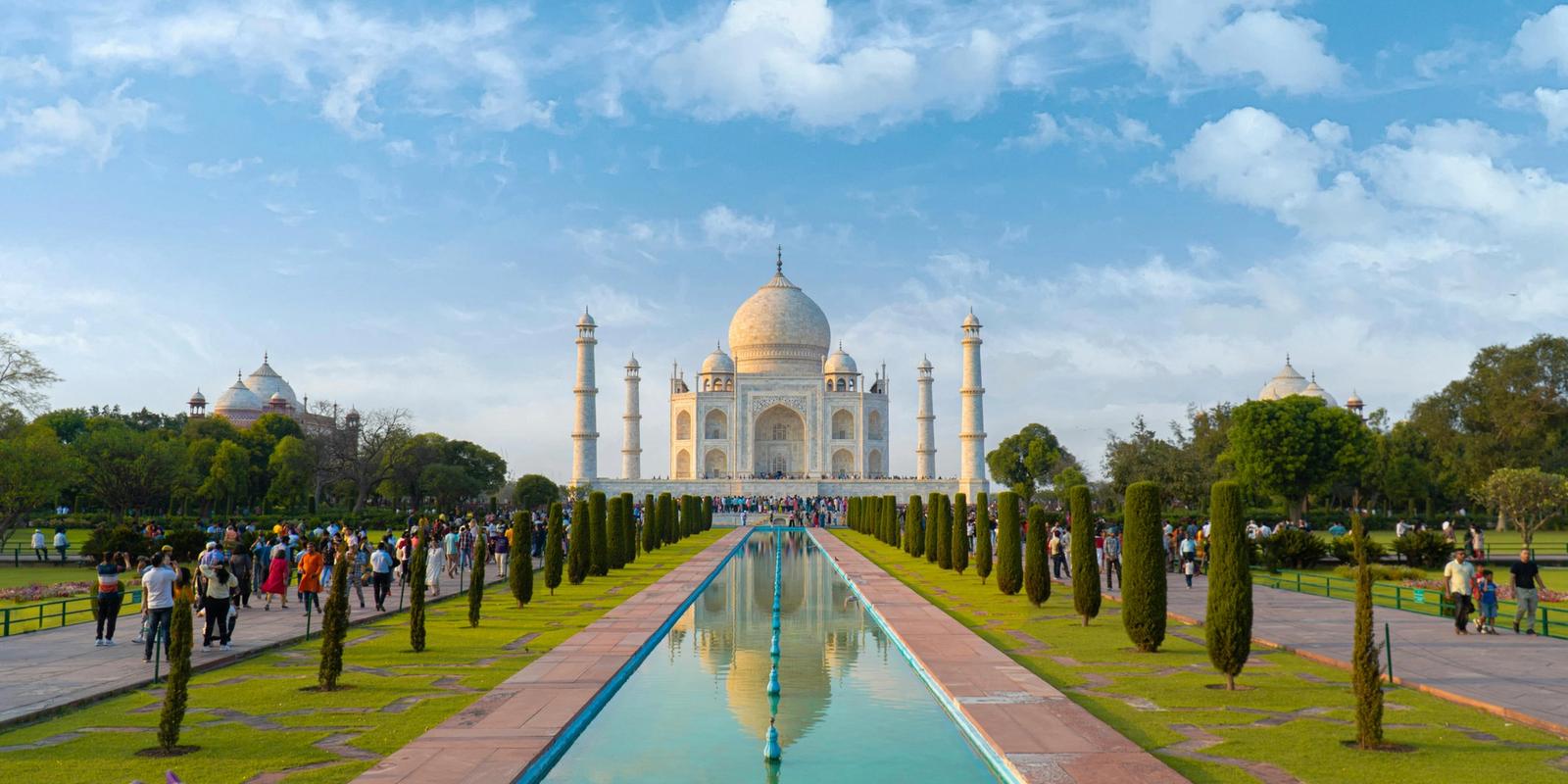
Every year, nearly eight million people walk through the gates of the Taj Mahal. They snap the same photograph from the same angle, spend forty-five minutes there, and move on. I've watched this happen countless times, and frankly, it breaks my heart a little each time.
The Taj Mahal deserves so much more than a quick camera click. After spending years guiding travelers through Agra and watching what actually sticks with them, I've learned that what most travelers miss when visiting the Taj Mahal has nothing to do with how well they can frame a photo. It's about the experience itself—the moments in between, the details that make your pulse quicken, and the understanding that transforms a monument into a story.
Let me share what I have learned from watching thousands of visitors, and what I wish someone had told me during my first visit.
The Timing Most People Get Wrong
Here's the thing: everyone wants to see the Taj Mahal at sunrise. It makes sense, right? Golden light, fewer crowds, that Instagram-perfect glow. The problem is that everyone else had the same idea.
If you're actually there at sunrise, you are standing shoulder-to-shoulder with hundreds of other people who also wanted that perfect shot. The magic gets lost in the crush. But here's what most visitors do not consider: late afternoon visits are where the real experience happens.
Between 3:00 PM and closing time, something shifts. The light turns warm and honest. Shadows get longer and more defined. The marble starts showing its true personality instead of just reflecting sunlight. You get breathing room to actually look at the building instead of constantly positioning yourself around other photographers.
Plus, here's a practical advantage nobody talks about: the ticket lines are dramatically shorter. You walk in, pay less stress, and have time to actually wander.
The Small Details That Make You Understand Why It Was Built
The Taj Mahal was built by Shah Jahan as a mausoleum for his wife Mumtaz Mahal after she died. That's the story everyone knows. But most people never slow down enough to feel it.
The inlay work on the marble walls tells that love story in a way words ca not. Semi-precious stones—jade, carnelian, turquoise, and lapis lazuli—were cut so precisely and fitted so carefully that you can barely see the seams. Craftsmen spent years on sections that most tourists walk past without looking.
Here's what I tell people to actually do: find a quiet spot, sit down, and let your eyes adjust. Look for:
The floral patterns that repeat but never identically
The way light hits the stone and creates depth you did not notice before
The Arabic calligraphy panels that seem to shift as you move
The perfectly symmetrical gardens that frame everything
Once you stop rushing, you realize this was not just a building. It was devotion made into marble.
The Mistakes First-Time Visitors Make
After watching countless visitors, these are the patterns I see again and again:
Bringing too much stuff. You do not need your full backpack, your extra lenses, your five different outfits. You will spend half your time managing your belongings instead of experiencing the place. Leave the camera bag in the hotel. Bring one phone or one camera. That's it.
Believing the "official" guides. Many of the guides hanging around the entrance are unlicensed, and while some are helpful, others will rush you and make it about their commission at nearby shops. If you want a guide, book through your hotel beforehand. If you are going solo, the official information boards are actually pretty good.
Getting caught in scams near the gates. Touts will approach you with "special" tickets, "exclusive" viewpoints, or "private" tours. They are not offering anything real. The main entrance is straightforward. Stick to it.
Visiting on a Friday or during Indian holidays. The crowds are genuinely overwhelming on these days. The Taj Mahal becomes a human traffic jam. Weekdays, especially Tuesdays through Thursdays, are infinitely better.
Not checking the moon cycle. If there's a full moon, the Taj Mahal does evening visits. Yes, daytime is stunning, but there's something uniquely moving about seeing it illuminated under moonlight. It's different, quieter, and somehow more intimate.
What the Local People Actually Recommend
I have asked locals—guides, vendors, people who live in Agra—what they think visitors should focus on. Their answers are telling.
Nobody mentions the gift shop or the fancy restaurants. Instead, they talk about:
Walking around the back side of the structure (most people stick to the front)
Sitting in the red sandstone pavilions on the sides and just absorbing the quiet
Visiting early morning for the completely different angle when mist still hangs over the grounds
Going to Mehtab Bagh (the garden across the river) for an entirely different perspective of the monument
Taking time at the reflecting pool to actually observe how the marble changes color as clouds pass
The locals also recommend checking out nearby Agra. The Agra Fort, built by the same emperor, shows the architecture from a completely different context. The tomb of Itmad-ud-Daulah is stunning and barely crowded—some people call it the "baby Taj Mahal."
If you are exploring the region, consider looking into Taj Mahal Tours that include nearby attractions. These often show you the full picture of Mughal architecture instead of just the most famous building.
The Photography Tip That Changes Everything
Everyone takes the same front-facing photo. You know the one—straight-on, centered, predictable. Here's what transforms your photos:
Get low. Get behind things. Look for angles where the Taj Mahal is framed through something else. Shoot from the sides where the sunlight creates dramatic shadows. Include people in your shots instead of trying to get empty frames—it tells the real story of being there.
The best photo I have ever taken of the Taj Mahal was not a clear, front-facing shot. It was late afternoon, slightly blurred foreground, the monument glowing through a haze. It looks imperfect, but it captured exactly how I felt being there—emotional, a little overwhelmed, honest.
What You will Actually Remember
Here's something nobody warns you about: the smell of jasmine flowers mixed with incense. The sound of echoes inside the mausoleum chamber. The way the cool marble feels under your hands. The moment you stop thinking about time and just exist in the presence of something genuinely magnificent.
You will remember the Indian families visiting together, dressed in their finest clothes, laughing and taking photos. You will notice the elderly couple walking slowly through the gardens, her hand in his, neither of them saying anything. You will see children running through the pathways with pure joy.
These are the moments that actually stay with you. Not the selfies. Not the time stamps. The human moments.
Making It Peaceful
Want a genuinely peaceful experience? Here's your realistic plan:
Go on a weekday, late afternoon, without a tour group. Bring water and comfortable shoes. Enter, find a quiet spot, and just sit. Let the place exist around you instead of constantly documenting it. Talk quietly with whoever you are there with. Notice things instead of checking them off a list.
The Taj Mahal is patient. It's not going anywhere. You can move slowly.
The Honest Truth
What most travelers miss when visiting the Taj Mahal is not hidden. It's not secret. It's simply this: the difference between seeing something and experiencing it.
A million people can visit and come away with similar photographs. But the ones who return home truly changed are the ones who stopped rushing. Who sat in the shade. Who let the place tell its story. Who understood that they were standing in front of something someone built out of grief and love.
That's what matters. That's what stays with you. Everything else is just details.
Go to the Taj Mahal. But please, when you do, give it more than forty-five minutes and a camera angle. It deserves your actual presence, not just your presence in a photo. I promise you will leave with something much richer than a picture.
Share
Written by
Grace Plant
Grace is a freelance travel writer from Lancashire, England. In 2019, she embarked on a year-long adventure across India where she discovered her passion for crafting engaging travel content. Since then, she’s turned that passion into a full-time career, making her mark in various international travel publications. When she’s not writing and exploring, Grace enjoys foraging for wild plants and fungi and spending time in nature with her border terrier, George.