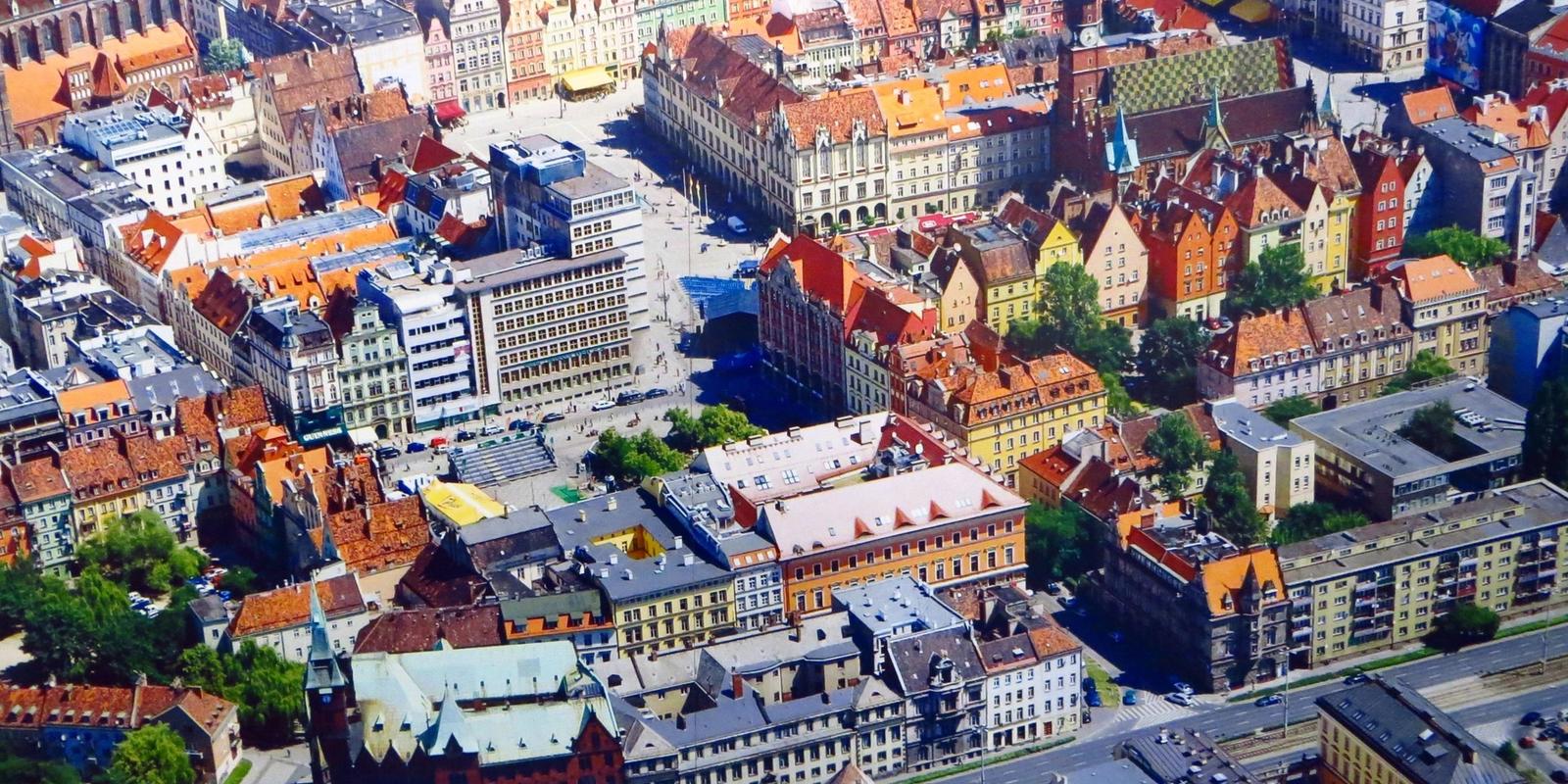
Poland's fourth city and the historic capital of Silesia, Wroclaw, pronounced “Vrahts-waf”, is a newly discovered European gem. A meeting point between East and West Europe, this developing modern commercial, cultural, and activity center has gained confidence from being a host city to several prestigious events. These include: UEFA Euro 2012 World Weightlifting Championship 2013
The chosen site for various international conferences
Previously known as Breslau, Wroclaw has been at the heart of European history, having at various times been part of Bohemia, the Austrian Empire, Prussia, and later Germany before being incorporated into Polish territory in 1945. A fortress city on the River Oder since the 10th century, it was partially destroyed during the Russian advance in the latter stages of World War II. However, the old city of “twelve islands” and over 100 bridges has since been painstakingly restored and is now counted among the best architectural highlights of Central Europe.
The colorful and interesting past is reflected in the city's fascinating architectural and cultural heritage. What differentiates this university city, which has spawned 10 Nobel Prize winners, is its well-developed lively cultural scene and its reputation for value for money.
Cultures Old and New
On the journey into the city center, you may notice the three faces of modern Wroclaw.
The brash new commercial buildings like the Sky Tower (until recently the country's tallest) represent modern, confident Poland.
The soulless concrete accommodation blocks of the "Soviet" era stand in stark contrast.
The picturesque historic old city and Cathedral Islands showcase Bohemian, Austrian, and Prussian influences.
Together, they create an eclectic mix of old and new cultures.
Whatever your schedule, find time to stroll around the Old Town, where you will discover splendid and colorful historic buildings as well as the best shops, bars, galleries, and museums. At its heart is the:
Splendid medieval Square and meeting place - one of the largest in Europe.
Massive 14th-century City Hall with its 66-meter tower, now housing the Museum of Bourgeois Art and The Municipal Museum, as well as the Spix Brewery and the cellar restaurant "Piwnica Swidnicka," often advertised as the oldest restaurant in Europe.
Also, look out for the astrological clock on the eastern facade dating from 1580. Overlooking the square is the grand and imposing church, which also dates back to the 14th century.
Climb the 300 steep steps to reach the observation deck at the top of the church’s 91m spire and gaze out over the city.
South of the Rynek is another church tower to ascend, where unusually you can walk the bridge between the twin spires. North of the Market Square is the historic Wroclaw University building, dominated by baroque masterpieces. You must see the opulence of the Aula Leopoldia, where you will also discover bargain eateries and interesting bookshops.
To the east of the Old Town is Slowackiego Park, where two of Wroclaw's most popular attractions are located:
The National Museum, home to one of the largest Polish art collections.
The purpose-built Rotunda that houses the magnificent Panorama of the Battle of Racławice - a 114 by 15 meter cylindrical painting designed to commemorate the 1794 Kosciuszko Insurrection, when a Polish rebellion defeated the Russian army.
You will certainly notice the many dwarfs of Wroclaw. These small statuettes set into pavements can be found all over the city. Another interesting spectacle on the corner of Pilsudskiego and Swidnicka is the collection of huddled bronze figures breaking out of the pavement. These have been created not merely as fascinating street art but to commemorate the activity of the 1980s Orange Alternative democracy protest movement (part of Solidarity).
Although the Old Town is the heart of Wroclaw, its soul and origin is Ostrów Tumski, a group of picturesque islands a short walk across the Tumski Bridge northeast of the Rynek. This tranquil area, with its cobblestone alleys still lit by original gas lamps, is the religious center of the city with its stunning 13th-century Gothic landmark Cathedral.
There are many interesting religious buildings as well as the Archdiocesan Museum in the vicinity, but the Cathedral itself features stunning stained glass windows, a 16th-century altarpiece, and a pipe organ built for the Centennial Hall, which was once the largest in the world.
Take the lift up the 98m spire for great views of the islands, and at dusk, see the gas lamps creating a romantic evening setting in Ostrów Tumski. Across the river, you will find evidence of a more prosperous age - grand boulevards, stately mansions, and apartments. Venture further east and you will discover the modernist UNESCO-listed 1913 Max Berg Hala Ludowa (People's Hall) and the fantastic 40-meter high Wroclaw Zoo (an ice rink in winter).
The Wroclaw Stadium, built by Hitler and named after Hermann Göring to support the 1936 Berlin Olympics, is now a speedway track. South of the Old Town, the Royal Palace is worth a view. Beautifully restored from wartime damage and now housing the City Museum, this was the residence of the Prussian Hohenzollern Emperors from the 17th to 20th century.
Further south, to get the best aerial panoramic view of Wroclaw and its surroundings, take the lift to the 49th floor Observation Deck of the Sky Tower. Completed in 2012, this 212-meter-high building housing office, apartment, shopping, and leisure facilities is one of the tallest in Poland.
What to Do
There are plenty of guided and self-guided tours to view the historic and cultural sights in Wroclaw and its surrounds. However, like most places in Central Europe, the season will determine some of the outdoor opportunities.
During April to October, the best way to take in the charm and beauty of the city is to explore its many canals. Boat trips and short cruises on the Oder are plentiful during the day and night. In December, January, and February, the temperature averages around zero, so indoor or more adventurous activities may be appropriate!
The Aquapark-like shopping is something that can be enjoyed year-round! Wroclaw is the shopping mecca for the region. The Renoma, included on the Register of Historical Monuments, was the premier shopping venue in the 1930s. It has recently been modernized and restored, now housing over 120 shops, cafes, and restaurants, with the roof terrace offering a panoramic experience.
Wroclaw's other city center shopping malls include Arkady, Galeria Dominikanska, and Likus, while on the edge of the city are the City Sky Tower, Pasaz Grunwaldzki, and Magnolia Park - the largest shopping venue covering over 240,000 square meters. If you are looking for something local to take home, vodka and amber are the items to buy.
Wroclaw’s nightlife is wide-ranging, from theater, opera, and philharmonic venues to nightclubs and "stag activities." There are over 100 bars and clubs catering to all tastes. Kuznicza Street is the location for cheap eateries and "student" bars, while most of the islands have restaurants with lovely riverside views. The Old Town, particularly Market Square, is the place for meeting and the focus for restaurants, cafés, pubs, and clubs.
The Spiż microbrewery, located in the basement of the new Town Hall, offers homemade wheat beer, which is excellent consumed with wholemeal bread and smalec – a traditional Polish "dripping" made from lard and spices.
In fact, Wroclaw, as its history suggests, has a multi-cultural base following German, Austrian, Italian, and Slavic traditions, using staple meats and winter vegetables - featuring soups, sausages, and dumplings. There are many regular festivals in Wroclaw covering food and drink, including the beer festival, music and opera, cinema and films, books and literature, sport, and of course, the festive Christmas Market through December.
For the young and adventurous, Wroclaw is now becoming a popular destination with opportunities for: Parachute jumping Zorbing Off-road 4x4 White water rafting Ballooning
Live ammo range shooting with AK47, Glock, and pump-action shotguns
Just the basis for a "lads weekend." For the really adventurous, there are a number of operators catering for the "extreme sports" crowd, providing packages that include any of the above activities plus pubs, clubs, and more!
Wroclaw Travel & Accommodation
Located in southwest Poland, new motorways connect Wroclaw with Berlin in the west and Krakow in the east. The newly refurbished 19th-century neo-Gothic rail station provides a leisurely but grand entrance into the heart of the city, with trains from Warsaw, Krakow, Germany, and the Czech Republic.
However, for many visitors, the gateway to Wroclaw is the new Copernicus Airport. Situated 13 kilometers from the city center, it is served by several airlines, including low-cost carriers to destinations across Europe.
The city center itself is flat and easily tackled on foot or by taxi, but there is also an excellent inexpensive public transport network with extensive bus and tram routes for getting around the city and venturing into the suburbs.
The city has also developed a network of bike paths and a bike rental system, Wroclaw City Bike, for the more eco-minded. In recent years, the city has developed a range of hotel and hostel rooms to suit visitors of all budgets, including the beautifully renovated 19th-century 5-star Monopol Hotel, which has hosted guests as diverse as Greta Garbo, Adolf Hitler, and Prince Andrew.
slider
Share
Written by
Paul Allsopp
Paul is a former management consultant who travelled extensively for both business and pleasure. He has a strong interest in history and enjoys visiting new places. His travels include destinations across Europe, such as Malta.