Cannock Chase: The Complete Visitor Guide to Walks, Wildlife, Hidden Gems & Local Tips
The complete visitor guide to Cannock Chase — the best walks, trails and starting points, deer-spotting, mountain biking, parking costs, seasonal advice and local tips.
Cannock Chase is one of Staffordshire's most beautiful outdoor destinations, but there's much more to it than a few woodland paths. Hidden among its pine forests, ancient oak trees and sweeping heathland are stepping stones, Iron Age earthworks, peaceful valleys, wildlife habitats and reminders of two world wars.
It's the sort of place where you can enjoy a gentle 30-minute stroll, spend an entire afternoon exploring quiet woodland or challenge yourself on some of England's best-known mountain biking trails.
The important thing is knowing where to go.
Cannock Chase covers a large area with several different starting points. Arriving at the wrong car park can mean missing the scenery or experience you came to enjoy.
This guide covers the best places to explore, which trails are worth your time, where to park, how to see deer responsibly and the practical details that make a visit considerably easier.
Whether you're visiting for the first time or returning to discover somewhere new, here's how to make the most of Cannock Chase.
Cannock Chase at a glance
Location — Staffordshire, between Cannock, Rugeley, Stafford and Penkridge
Protected status — National Landscape, formerly an Area of Outstanding Natural Beauty
Size — Approximately 68 square kilometres (26 square miles)
Admission — Free to explore most public walking areas; parking and certain attractions cost extra
Best for — Walking, wildlife, cycling, photography, family adventures and peaceful countryside
Main forest entrance — Birches Valley, Rugeley, WS15 2UQ
Alternative visitor centre — Marquis Drive, Hednesford, WS12 4PW
Recommended visit — 2–4 hours, or a full day for multiple locations
Best overall seasons — Spring and autumn, although each season offers something different
Quick tip: Cannock Chase National Landscape and Cannock Chase Forest are not exactly the same thing. The National Landscape covers the wider protected countryside, while Cannock Chase Forest is the Forestry England-managed recreational area around Birches Valley. This distinction matters when choosing walking routes, parking and cycling activities.
Where should you start? The best parts of Cannock Chase
The Chase isn't a single attraction with one entrance. It's a collection of woodland, heathland, historic sites and visitor facilities spread across southern Staffordshire.
Choosing your starting point according to what you want to do is the easiest way to improve your visit.
First-ever visit — Birches Valley — Facilities, signed trails, café and cycle hire
Short family walk — Birches Valley — Easy Ladyhill Trail and woodland play
Scenic woodland and pools — Birches Valley — Access to the Fairoak Trail
Historic walks — Marquis Drive — Military heritage and accessible walking routes
Quieter woodland exploration — Seven Springs — Woodland paths and access towards Brocton Coppice
Open views and ancient history — Castle Ring — Iron Age hillfort at the Chase's highest point
Deer-spotting and heathland — Brocton and the surrounding Chase — Open countryside and extensive wildlife habitat
Longer countryside walks — Milford Common — Walking routes towards Shugborough and the northern Chase
Mountain biking — Birches Valley — Dedicated graded trails and bike facilities
A nature-focused, gentler outing — The Wolseley Centre — Wildlife reserve, accessible paths and café
For attractions beyond the forest itself, including shopping, museums and nearby days out, see our separate guide tothings to do in Cannock.
1. Birches Valley: The best place for first-time visitors
If you have never visited Cannock Chase before, Birches Valley is usually the easiest starting point.
Managed by Forestry England, Cannock Chase Forest offers numerous walking routes, dedicated cycling trails, children's activities and visitor facilities.
There's a café, toilets, picnic areas, cycle hire and an information point. The main trails begin close to the car park, so you don't need to navigate unfamiliar country lanes or search for an unmarked footpath.
What can you do at Birches Valley?
The highlights include:
The Ladyhill Trail, ideal for a short and gentle walk.
The Fairoak Trail, which explores a scenic valley and woodland pools.
Children's play areas and woodland activities.
Go Ape high-ropes adventures.
Mountain biking routes for different abilities.
Forest running, picnicking and wildlife watching.
Visitor tip: Start with the Ladyhill Trail if you're unsure how far you want to walk. You can enjoy the forest without committing to a lengthy hike, then decide whether to explore further.
Getting there: Use WS15 2UQ and select Cannock Chase Forest – Forestry England, main car park on your navigation app.
Check theForestry England visitor page before travelling for parking information, opening hours and any temporary changes.
2. The best walks on Cannock Chase
One of Cannock Chase's biggest attractions is the variety of walking routes. Some are short, surfaced circuits that work well for a relaxed outing. Others involve woodland climbs, open heathland and several hours on your feet.
Here are some of the most useful established routes.
The Ladyhill Trail is one of the simplest ways to enjoy Cannock Chase without tackling long distances or steep woodland paths.
It's mostly flat, follows gravelled forest paths and is suitable for many wheelchair and pushchair users.
Along the route, families can look for fairy trees and a Gruffalo sculpture, while nearby open spaces provide opportunities for playing and picnicking.
Despite being family-friendly, it's just as useful for adults wanting a peaceful woodland stroll.
Tip: This is a particularly sensible choice after heavy rain, when some of the Chase's natural trails can be muddy. The gravel surface is generally more manageable, although conditions still vary.
Fairoak Trail: Best for woodland scenery and water
Starting point: Birches ValleyDistance: 2.5 miles (4 km)Route: Circular
The Fairoak Trail is one of the best all-round walks for visitors wanting more than a short circuit.
The route winds through woodland before opening into the Fairoak Valley, where attractive pools create a very different setting from the surrounding pine forest.
You may see ducks, swans and other wildlife, particularly if you walk quietly.
The valley also has a coal-mining history, adding another dimension to the landscape.
There is an important accessibility detail: the route includes stepping stones near the end that are unsuitable for wheelchairs and pushchairs. Forestry England advises an alternative return along the path between the pools.
Tip: Choose this walk if you enjoy photographing reflections, woodland scenery and changing seasonal colours. Early or late daylight can create attractive conditions around the water.
RAF Hednesford Trail: Best for an easy historical walk
Starting point: Cannock Chase Visitor Centre, Marquis DriveDistance: 2 miles (3.2 km)Route: Circular
This walk combines relatively accessible terrain with a fascinating part of the area's history.
During the Second World War, RAF Hednesford was an important training establishment. Today, interpretation panels explain the site's past as you follow a mostly level, well-surfaced route.
Benches along the way make it a good choice for visitors who prefer regular opportunities to rest.
The route is also one of the most accessible walks promoted by Cannock Chase National Landscape.
Tip: Allow extra time to read the interpretation boards. The military history is a major part of what makes this walk distinctive.
Castle Ring and Beaudesert Old Park: Best for a longer adventure
Starting point: Castle Ring car parkDistance: 5.25 miles (8.4 km)Route: Circular
This is a good option for walkers wanting a more substantial outing.
Starting near the ancient hillfort, the route continues into the wooded landscape of Beaudesert Old Park.
Expect forest tracks, changes in elevation and some short, steep sections.
The combination of ancient history, woodland and more demanding terrain makes it rewarding for experienced walkers.
Tip: Wear proper walking footwear and download the route before leaving home. Some of the area's junctions are less obvious than the brightly marked trails around Birches Valley.
Chase Heritage Trail: Best for a full day's walking
Distance: 10 miles (16 km)Route: Linear
The Chase Heritage Trail links Cannock, Hednesford and Rugeley, exploring the history and changing landscape of the area.
It passes places connected with the region's industrial, military and community heritage.
However, one important point often gets overlooked: the full route isn't circular.
You'll need to arrange transport back to your starting point, retrace part of your route or choose a shorter section.
The National Landscape also publishes shorter circular routes and walking information.
Sherbrook Valley is one of Cannock Chase's most atmospheric places.
Rather than towering pines throughout, the landscape includes a wooded valley, streams, open sections and trails that gradually reveal the contours of the Chase.
The stepping stones are a particularly appealing feature and make an enjoyable destination for walkers and photographers.
The valley is reached through a network of paths, including routes from the Seven Springs and Brocton areas.
Tips for visiting the stepping stones
Don't assume that searching simply for 'Cannock Chase stepping stones' will give you the most suitable parking location. There are several stream crossings in the wider forest, including stepping stones on the Fairoak route.
Decide which valley or walk you want first, then choose the appropriate trailhead.
After prolonged rain, stones can be slippery and water levels may rise. Never attempt a crossing that looks unsafe.
It's also worth remembering that Sherbrook Valley is a natural environment rather than a maintained urban park. Some paths may become muddy, uneven or difficult to follow.
Best experience: Visit on a dry day, allow plenty of time and enjoy the wider valley rather than treating the stones as a quick photo stop.
4. Brocton Coppice: Ancient woodland and quieter scenery
Not every memorable part of Cannock Chase involves a formal visitor attraction.
Brocton Coppice is notable for its ancient oak woodland and has a very different character from the commercial conifer plantations elsewhere.
Older trees, winding paths and changing woodland light make it particularly rewarding for people who enjoy the natural details of a landscape.
Autumn is especially atmospheric, with fallen leaves, fungi and rich woodland colours.
The coppice is also ecologically sensitive. Keep to established paths and avoid disturbing deadwood, fungi or wildlife habitats.
Tip: If you're interested in nature photography, look for interesting bark, twisted branches, moss and low-angle sunlight rather than concentrating exclusively on wide landscape photographs.
5. Castle Ring: The highest point on Cannock Chase
Castle Ring is an Iron Age hillfort at the southern end of Cannock Chase, near Cannock Wood.
At approximately 242 metres above sea level, it is the highest point within the National Landscape.
Despite the name, don't expect the remains of a stone castle. The main features are ancient earthworks, banks and ditches that formed part of a defensive hillfort over 2,000 years ago.
Its elevated position and historical significance make it a worthwhile destination in its own right.
Why visit Castle Ring?
You can explore the earthworks, take in views of the surrounding landscape and connect onto longer walks through nearby woodland.
Unlike Birches Valley, Castle Ring feels less like an organised family attraction and more like an ancient landmark within the countryside.
Paths around the monument can be uneven, sloped or stepped.
Tip: Visit on a clear day for the best chance of distant views. In wet weather, take additional care on sloping and grassy surfaces.
6. Cannock Chase's remarkable military history
Much of Cannock Chase's peaceful landscape hides an extraordinary military past.
During the First World War, large training camps were established at Brocton and Rugeley. Thousands of soldiers trained on the Chase, including members of the New Zealand forces.
During the Second World War, RAF Hednesford introduced another significant chapter.
Today, former camp infrastructure, earthworks, interpretation boards and memorials provide reminders of these activities.
Cannock Chase Visitor Centre at Marquis Drive
Marquis Drive is a particularly useful starting point for exploring the Chase's military heritage.
Nearby walking routes introduce visitors to former training areas, while the restored Great War Hut offers an opportunity to learn more about life during the First World War.
The hut has limited opening arrangements, so check availability before making a special journey.
German Military Cemetery
Near Brocton, the German Military Cemetery is one of the Chase's most distinctive historical sites.
Established as a central resting place for German war dead buried in Britain, it contains thousands of graves from the two world wars.
It is a peaceful and carefully maintained place intended for reflection.
Nearby is Cannock Chase War Cemetery, maintained by the Commonwealth War Graves Commission.
Visitor tip: Treat the cemeteries as heritage and remembrance sites rather than ordinary tourist attractions. Check access times in advance, particularly during winter.
7. Where to see deer on Cannock Chase
For many visitors, spotting deer is one of the highlights of Cannock Chase.
The area's mix of heathland, woodland and open countryside provides suitable habitat, although sightings are never guaranteed.
You may encounter deer near open woodland edges or crossing between areas of cover.
When is the best time?
Early mornings and quieter periods later in the day can offer good opportunities to see wildlife.
Autumn is particularly interesting because of the deer rut, when male deer compete during the breeding season.
However, deer are wild animals and should always be treated with caution.
Important deer-spotting advice
Watch from a generous distance, especially during the rut.
Never attempt to feed or touch deer.
Keep dogs firmly under control.
Avoid approaching animals to obtain photographs.
Don't block roads or stop vehicles in unsafe places to watch them.
Allow deer to move away without following them.
A telephoto lens or binoculars will give you a much better experience than attempting to get close.
Tip: Look for deer while enjoying a normal walk rather than heading off established paths in pursuit of them. It's better for the animals and less likely to damage sensitive habitats.
8. Mountain biking on Cannock Chase
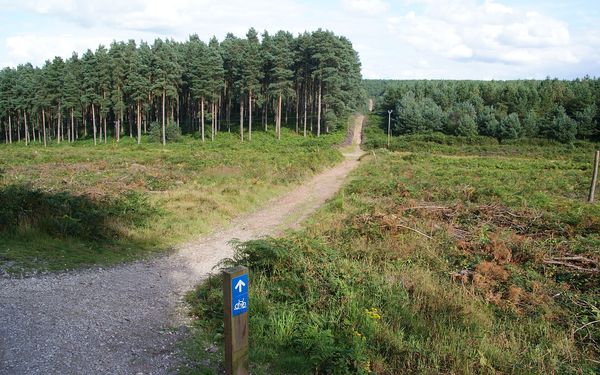
Cannock Chase is a major destination for mountain biking, with routes ranging from beginner-friendly forest cycling to technical singletrack.
The trails around Birches Valley are a particularly good place to start.
Fairoak Trail — 4 km — Green — Beginners and relaxed forest riding
Perry's Trail — 4.3 km — Blue — Riders progressing beyond easy routes
Follow the Dog — 10.8 km — Red — Proficient mountain bikers
The Monkey Trail — 22.8 km — Red, with black options — Experienced mountain bikers
Which trail should you choose?
Beginners: Start with the Fairoak Trail or another designated easy route. Be mindful of walkers and other trail users.
Improving riders: Perry's Trail introduces flowing singletrack, rollers and optional features for developing confidence.
Experienced riders: Follow the Dog offers climbs, rock gardens, berms and more technical riding.
Advanced riders: The Monkey Trail is more physically demanding and features technical sections and optional black-graded challenges.
An important detail: the Monkey Trail is accessed from part of Follow the Dog, so plan the complete ride rather than assuming its published distance represents every kilometre you'll cycle from the car park.
Cannock Chase hosted mountain biking events during the Birmingham 2022 Commonwealth Games, helping to showcase the area's cycling facilities.
Bike hire is available at the forest centre, but availability and opening arrangements should be checked in advance.
Cycling tip: Much of the wider Chase contains sensitive wildlife habitats. Bikes are not permitted everywhere, so stick to designated cycling trails and legally accessible routes.
9. Other places worth visiting around Cannock Chase
The Wolseley Centre
The Wolseley Centre at Wolseley Bridge is run by Staffordshire Wildlife Trust and is one of the area's more relaxed nature destinations.
Its grounds include lakes, woodland, riverside areas and accessible paths.
There is also the Kingfisher Café, making this a good option for visitors who want to combine a gentle walk with refreshments.
Entry to the nature reserve is free, although donations are welcome.
The grounds generally open daily from 9am to 5pm, with the car park gates closing at 5pm.
It's particularly suitable for wildlife watching, families and visitors who prefer a shorter walk.
Shugborough Estate
At the northern edge of Cannock Chase, the National Trust's Shugborough Estate combines extensive parkland with a historic mansion, gardens and farm buildings.
It's a good way to balance a morning in the forest with a more structured afternoon.
Some parts of the estate have different opening times, and admission charges apply unless your membership or another entitlement covers entry.
Chase Vista, near Brocton Coppice, is worth considering if you prefer open scenery and elevated views over heavily wooded trails.
It offers an opportunity to explore grassed and woodland areas, with a different feel from the busier routes at Birches Valley.
Choose clear weather if wide landscape views are your priority.
Seven Springs
Seven Springs is a useful starting point for exploring the northern part of the Chase.
The surrounding paths connect with woodland, valleys and longer walking routes.
It is generally more suitable for people comfortable with natural paths than those expecting the facilities of a major visitor centre.
Milford Common
Milford Common is another convenient access point, particularly for people approaching from Stafford or exploring routes towards Shugborough.
It works well as a starting point for an easy countryside outing, though surface conditions and gradients vary along the available paths.
10. Cannock Chase parking: Where to park and what it costs
Parking is one of the most useful things to check before visiting Cannock Chase.
Different car parks are managed by different organisations, and their charges and facilities are not identical.
Birches Valley parking prices
Forestry England's published car parking charges, checked November 2026, are:
Up to 1 hour — £4.00
Up to 2 hours — £7.50
Up to 3 hours — £11.00
Over 3 hours — £12.50
Birches Valley uses a cashless automatic number-plate recognition system.
The practical point is to enter your registration and pay before leaving, rather than searching for a traditional pay-and-display ticket on arrival.
Check signs and current instructions when you enter.
Marquis Drive and Milford Common parking
Staffordshire County Council publishes the following charges for its pay-and-display car parks at Marquis Drive and Milford Common:
Up to 2 hours — £1.20
All day — £3.50
Payment options include cash at parking machines or the RingGo app.
These charges are considerably lower than the main Forestry England car park, although the facilities, trails and experiences are different.
Parking tips worth knowing
Choose the trail before choosing the car park. A cheaper space is not necessarily useful if it leaves you far from the route you want.
Don't assume every car park has toilets. Many smaller countryside parking areas have no facilities.
Check gate closing times. The Birches Valley forest car park has seasonal hours.
Don't park on verges or block entrances. Use designated parking spaces.
Check temporary closures. Forestry operations, events and safety work can affect parking and trail access.
Allow extra time during busy weekends. Popular starting points can be busier during school holidays and good weather.
Prices and arrangements can change. Always follow on-site signs and current operator information.
11. When is the best time to visit Cannock Chase?
One of the great things about Cannock Chase is how different it feels throughout the year.
Spring: Fresh woodland and quieter walks
Spring brings new leaves, birdsong and a gradual return of colour to woodland areas.
It is a pleasant time for longer walks before the hottest summer weather.
However, many birds nest on or near the ground, so keeping to paths and controlling dogs is especially important.
Summer: Long days and outdoor activities
Summer offers more daylight for walking, cycling and family outings.
It's a good season for picnics and the organised attractions around Birches Valley.
On warm weekends, popular visitor facilities can become busy.
Tip: Start earlier for easier parking and a quieter walk, or choose an alternative trailhead if you don't need the main visitor facilities.
Late summer: Heather and open landscapes
Sections of the Chase's heathland can turn beautiful shades of purple when heather flowers, generally around late summer.
The exact timing varies depending on weather and growing conditions.
For photographers, the contrast between purple heathland, green woodland and open sky can be particularly attractive.
Stay on established paths to protect the vegetation.
Autumn: Arguably the most atmospheric season
Autumn brings dramatic colour to the woodland, misty mornings and the possibility of hearing deer during the rut.
It's an excellent time for photography, especially around older trees and scenic valleys.
Expect damp leaves, mud and slippery surfaces.
Winter: Quiet walks and crisp scenery
Winter can be a surprisingly enjoyable time to visit Cannock Chase.
With fewer leaves on deciduous trees, the shape of the landscape becomes more visible, while frost and low sunlight can transform familiar paths.
However, daylight hours are shorter, the ground can be wet and exposed sections may feel considerably colder.
Tip: Choose a shorter circular route and finish comfortably before sunset. Don't rely on a car park remaining open after its published closing time.
12. Thirty practical Cannock Chase tips that make a real difference
These are the small details that can turn an average visit into a much better one.
Before leaving home
1. Decide what sort of day you actually want. Birches Valley is excellent for activities and facilities, while the wider National Landscape offers more open countryside and quieter walking.
2. Download your map offline. Mobile reception can be inconsistent in remote woodland or valleys, and unfamiliar paths can look similar.
3. Save the correct car park location. Postcodes can cover large rural areas. A named car park on your mapping app is often more reliable.
4. Check whether your walk is circular. Some of the Chase's longer heritage routes are linear and require return transport.
5. Look at recent weather, not just today's forecast. A dry morning doesn't guarantee dry ground after several days of rain.
6. Check for trail diversions. Forestry work, safety operations and maintenance sometimes require temporary changes.
7. Bring footwear suited to the route. Trainers may be fine for a surfaced short walk, but waterproof walking shoes are more appropriate for muddy or uneven tracks.
8. Carry a small waterproof layer. Open heathland can feel exposed when the weather changes.
9. Take drinking water even on cool days. Facilities are concentrated around visitor hubs and are not available throughout the Chase.
10. Pack snacks for longer walks. Don't assume there will be a café halfway around your route.
While exploring
11. Photograph the trail map at the start. This gives you an immediate reference if you become uncertain about a junction.
12. Notice the waymarker colours. Different routes can overlap, so pay attention when paths divide.
13. Don't automatically follow another walker. They may be heading somewhere completely different.
14. Allow more time than the distance suggests. Woodland gradients, photography stops, muddy sections and wildlife watching all slow a walk down.
15. Use established paths rather than shortcuts. Cannock Chase has rare heathland habitats that can be damaged by repeated trampling.
16. Be aware of mountain bikers. Shared-use trails can be busy, especially around Birches Valley.
17. Avoid stopping in the middle of cycling routes. Move to a safe position before checking your phone or taking photographs.
18. Take care near streams. Stepping stones, wet rocks and muddy banks can be surprisingly slippery.
19. Look for wildlife without approaching it. Binoculars are more useful than trying to get close to deer.
20. Don't feed the deer or other wild animals. Human food can harm wildlife and alter natural behaviour.
21. Take your rubbish home. Forestry England states there are no general litter bins in Cannock Chase Forest.
22. Never light a barbecue or fire. Barbecues are not permitted at Cannock Chase Forest, and wildfire risk is a serious concern.
23. Keep noise down in quieter areas. This improves your chances of seeing wildlife and preserves the experience for other walkers.
24. Don't pick or damage plants and fungi. Photograph them instead and leave habitats undisturbed.
Getting the most from your visit
25. Visit more than one section of the Chase. Pine forest, ancient woodland and open heathland offer noticeably different experiences.
26. Try a shorter route on your first visit. You'll develop a better understanding of the paths and can return for more ambitious walks.
27. Keep an eye on sunset. Woodland can become noticeably darker before the open sky does.
28. Remember where you parked. Save a location pin on your phone before setting off.
29. Combine attractions sensibly. A morning walk followed by Shugborough or the Wolseley Centre can make an enjoyable full day without requiring a strenuous hike.
30. Leave time to enjoy the surroundings. Cannock Chase is at its best when you aren't rushing from one landmark to another.
13. Visiting Cannock Chase with a dog
Cannock Chase offers extensive walking opportunities for dog owners, but its protected habitats make responsible dog walking especially important.
The Cannock Chase National Landscape canine code asks visitors to keep dogs on leads unless otherwise indicated, clean up after them and prevent disturbance to wildlife.
There are also specific legal requirements.
On Open Access Land, dogs must be kept on leads no longer than two metres between 1 March and 31 July. Visitors are asked to extend this practice to the end of August to help protect birds that may still be nesting.
Dogs should also be kept on leads around livestock.
Useful dog-walking tips
Bring your own waste bags and be prepared to take them home.
Carry drinking water for your dog, especially during summer.
Don't let dogs chase deer, livestock or other wildlife.
Avoid letting dogs enter wildlife ponds simply for a swim; freshwater habitats are sensitive to disturbance and pollution.
If your dog has unreliable recall, use a suitable lead rather than risking encounters with animals or cyclists.
Cannock Chase offers accessible options, but not every trail is suitable for wheelchairs, mobility scooters or pushchairs.
Natural trails can include loose gravel, slopes, roots, stones and muddy sections.
Best starting points for easier access
Ladyhill Trail: A mostly flat, one-mile circular route around Cannock Chase Forest. Forestry England recommends it for wheelchair users and all-terrain mobility scooters.
RAF Hednesford Trail: A two-mile circular route with mostly level, well-surfaced paths and benches.
The Wolseley Centre: Shorter nature trails and a boardwalk within a visitor reserve.
Shugborough Estate: Offers step-free routes and pre-bookable mobility equipment, although some estate paths are uneven.
Important: Forestry England does not provide mobility equipment hire at the Birches Valley forest centre. Tramper mobility equipment may be available through other visitor sites, including Marquis Drive, subject to arrangements and availability.
Cannock Chase is close to the M6 and is accessible from surrounding towns including Stafford, Cannock, Rugeley and Penkridge.
The most appropriate route depends on your chosen entrance.
Use Birches Valley for the main Forestry England forest visitor centre, or Marquis Drive for the Cannock Chase Visitor Centre and its associated heritage walks.
By train
Cannock, Hednesford, Rugeley Town and Rugeley Trent Valley offer rail access to different parts of the wider area.
However, the visitor attractions are spread across the countryside.
Rugeley Town is approximately 2.4 miles from the Birches Valley visitor centre, and there is no public bus route passing directly by that forest car park.
If arriving by train, plan the final part of your journey in advance rather than assuming a convenient shuttle service is available.
By bus
Bus services connect surrounding towns and some villages, but routes and frequencies vary.
Check the relevant operator's current timetable and make sure your chosen stop offers a safe walking route to the destination.
16. Three ways to spend a day on Cannock Chase
Option A: A relaxed first visit
Best for: Families, couples and first-time visitorsAllow: Around 3–4 hours
Start at Birches Valley and enjoy the one-mile Ladyhill Trail.
Take time to explore the forest and stop for coffee or lunch at the visitor centre café.
If you still feel energetic, explore another short section of the forest or spend time in the picnic area.
This is a straightforward option with minimal travel between attractions.
Option B: A scenic walking day
Best for: Walkers, photographers and nature loversAllow: Half a day or longer
Choose one of the established routes exploring Sherbrook Valley, Brocton Coppice or the surrounding heathland.
Bring water and a packed lunch, download the route and allow time for photographs.
Afterwards, if you're travelling by car, consider a separate visit to Castle Ring for a different landscape and an impressive historical landmark.
Option C: Nature and history
Best for: Adults interested in local history and peaceful outdoor activitiesAllow: A full day
Begin at Marquis Drive and explore the RAF Hednesford Trail.
Spend time learning about the area's wartime past, then visit the German Military Cemetery and neighbouring war cemetery during their published opening hours.
If time allows, finish with a visit to the Wolseley Centre or Shugborough Estate.
Thinking Cannock Chase has just one entrance. The area is extensive, so choose a trailhead that matches your plans.
Confusing Birches Valley with Marquis Drive. They are different visitor centres with different facilities, parking arrangements and routes.
Arriving without checking parking charges. Some sites have substantially higher charges than others.
Starting a long walk too late. Autumn and winter daylight disappears quickly, particularly beneath woodland cover.
Assuming every route is accessible. Even relatively easy walks can contain slopes, loose surfaces or stream crossings.
Attempting technical MTB trails without suitable experience. Red-graded trails require proper off-road riding skills and appropriate equipment.
Expecting guaranteed deer sightings. Wildlife encounters depend on timing, conditions and the behaviour of the animals.
Ignoring conservation guidance. The Chase is a protected landscape, not simply a recreational forest.
Final thoughts: Is Cannock Chase worth visiting?
Cannock Chase is absolutely worth exploring, particularly if you enjoy nature, walking, outdoor activities or places with an interesting history.
Its greatest strength is variety.
You can spend one visit beneath tall pine trees, another discovering the ancient oaks of Brocton Coppice, and a third exploring open heathland or historical sites.
The best advice is simple: choose the right starting point, plan your route and give yourself enough time to enjoy it.
You don't have to complete the longest walk or visit every attraction. Sometimes a quiet hour among the trees is enough to appreciate why Cannock Chase remains one of Staffordshire's most special landscapes.
Cannock ChaseEngland
Share
Written by
Jay Allsopp
Hi there! My name is James and I am the creator of ClickTravelTips. Launched in 2012, ClickTravelTips was designed to provide travel tips, editorials and guides. Since, the website has continued to grow, providing interesting travel content from individuals who consider travel to be one of their passions. In my spare-time I enjoy to travel and blog about it, especially in Wales.
Most public walking areas are free to access, but parking charges apply at several visitor locations. Activities such as Go Ape and entry to certain nearby attractions also cost extra.
What is the best part of Cannock Chase?
Birches Valley is generally the most convenient place for first-time visitors. Sherbrook Valley, Brocton Coppice and Castle Ring are excellent alternatives for walkers wanting different scenery.
How long do you need at Cannock Chase?
Allow at least two hours for a relaxed visit. Three or four hours is better for enjoying a scenic trail and refreshments, while a full day allows you to explore multiple locations.
Where is the best place to park?
For facilities and family trails, choose Birches Valley. For military heritage and accessible walks, Marquis Drive is a good option. Milford Common, Seven Springs and Castle Ring can be more suitable for exploring other parts of the landscape.
Can you see deer at Cannock Chase?
Yes, deer live on the Chase, but sightings aren't guaranteed. Quieter periods and open woodland edges can offer opportunities to observe them from a safe distance.
Is Cannock Chase suitable for children?
Absolutely. Birches Valley has short walking trails, play facilities and family activities. Children should be supervised near streams, on uneven terrain and around cycling routes.
Can you take dogs on Cannock Chase?
Yes, but dogs must be kept under control and there are lead requirements designed to protect wildlife and livestock, particularly during the bird-nesting season.
Is Cannock Chase good for mountain biking?
Yes. The Forestry England forest has established green, blue and red-graded cycling routes, including Follow the Dog and the Monkey Trail. Not all areas of the wider Chase permit cycling.
Are there toilets at Cannock Chase?
Toilets are available at major visitor sites such as Birches Valley, Marquis Drive and the Wolseley Centre, subject to operating arrangements. Smaller countryside parking areas may have no toilets at all.
Can you swim in the pools on Cannock Chase?
Don't assume forest pools, streams or reservoirs are suitable or permitted for swimming. These areas may contain sensitive habitats and hidden hazards. Use properly designated swimming facilities elsewhere.
Is Cannock Chase accessible without a car?
Yes, but some destinations require additional walking, a taxi or careful bus planning from nearby railway stations. Public transport does not serve every forest entrance directly.
Is Cannock Chase worth visiting in winter?
Definitely. Winter offers quiet trails, atmospheric woodland and occasional frosty scenery. Choose a suitable route, check conditions and leave enough daylight to return safely.