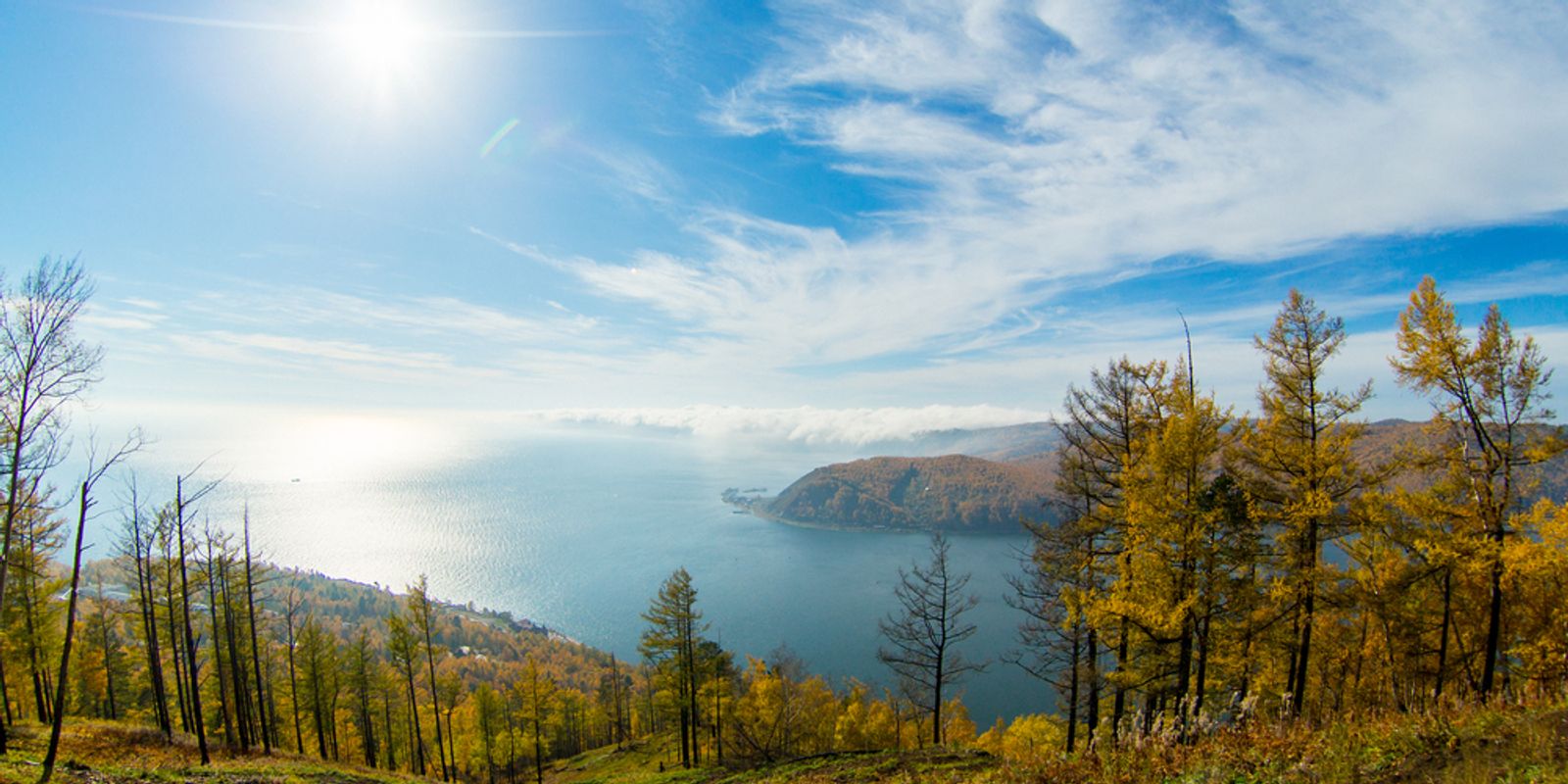
Not all waters are created equal—some stretch for miles, embodying serenity and grandeur. Dive into the world's largest lakes and unlock nature's magic!
Ours is a world of staggering natural beauty and wonder. There’s almost no better feeling than standing on the shore of a lake, looking out across shimmering still water and feeling completely calm. Lakes are a beautiful sight even if it’s raining; droplets hitting the surface of the water and rippling outwards can really make one feel completely at peace. We’ve gathered a list of the top 10 largest lakes in the world, so if you’re feeling like you need some tranquility in your life, make one of these a holiday destination pronto.
1. Caspian Sea - Russia / Kazakhstan / Iran / Turkmenistan / Azerbaijan
We start with a somewhat controversial entry, as the Caspian Sea is variously known as the world’s largest lake or simply a fully-fledged sea.
The debate centers around:
Whether the oceanic basin of the Caspian Sea makes it an ocean
Whether the fact that it’s landlocked classes it as a lake
It also contains saltwater, although the Caspian Sea has around a third of the salt found in saltwater oceans. It’s undeniably beautiful, though; bordered by Kazakhstan and Russia, it’s one to see if you ever visit either of those countries.
Superior is the largest of the five Great Lakes of America. Its total surface area is around 82,000 kilometers, and it’s about 560 km in length and 260 km in width.
If we discount the Caspian Sea and call it a sea as the Romans did, then Superior is the largest lake by surface area in the world.
10% of the Earth’s surface freshwater belongs to Lake Superior, making it an important lake for the ecosystem.
If you were to attempt to drive around Superior at around 65 miles per hour, it would take you around 20 hours to do so. Pretty impressive, eh?
3. Lake Victoria - Tanzania / Uganda
Lake Victoria is the largest tropical lake in the world. Situated in eastern Africa along the equator (don’t worry if it took you as long as us to realize that’s not an actual geographical line), Victoria was named after the English Queen Victoria.
Explorer John Hanning Speke was the first non-native to “discover” the lake. Its surface area is around 68,800 square kilometers, so it’s a little smaller than Superior, but it’s still a mighty body of water.
Speke also correctly deduced that it was the source of the river Nile.
4. Lake Huron - U.S. / Canada
Another of the American Great Lakes, Lake Huron’s total surface area is around 60,300 square kilometers, which makes it just a little smaller than the state of West Virginia.
Imagine a lake that approaches the size of an entire American state. More than 1,000 shipwrecks have occurred on Huron, with 22 of those wrecks being preserved in the Fathom Five maritime museum.
A dubious claim to fame, but perhaps the lake would be satisfied.
5. Lake Michigan - U.S.
Once again, we’re in America for one of the Great Lakes, only this one is entirely within the territory of the United States and doesn’t spread across to Canada at all.
The word “Michigan” derives from an Ojibwa Indian word, “mishigami”, which means “large lake”. Michigan’s surface area (the lake, not the state) is around 57,800 square kilometers, and it counts Chicago, Milwaukee, Green Bay, and Gary among its coastal cities.
6. Aral Sea - Kazakhstan / Uzbekistan
This lake may be named a sea, but it’s definitely a lake. Just like the Caspian Sea, it’s landlocked, receiving all of its water from the rivers Syr Darya and Amu Darya.
There are around 1,000 islands surrounding the Aral Sea. Many early Turkic ethnic groups, such as the Uzbeks, Kazakhs, and others, based themselves around the Aral Sea, relying upon its meager 100 mm rainfall to sustain them throughout harsh times.
It has a surface area of around 33,700 square kilometers.
This beautiful scenery makes for the perfect photo captures; be sure to take memorable photos when you visit any of these beautiful lakes.
Did you know that you can turn the photos into real wall art? Services allow you to place your memories in stunning fashion.
7. Lake Tanganyika - Tanzania / Democratic Republic of the Congo / Burundi / Zambia
Another African lake, Tanganyika has a surface area of around 32,900 square kilometers, but its real selling point is its length.
It’s around 670 kilometers long, making it the world’s longest freshwater lake.
Its retention time is around 440 years (that’s the amount of time water sits in a lake).
It’s well-known for its surrounding fishing communities, who rely on the lake’s 300 fish species for sustenance and trade.
8. Lake Baikal - Russia
Lake Baikal is haunted. Not really, of course, or at least not as far as we know; locals claim to have seen “spirits” hovering above the lake, which scientists believe are methane emissions igniting spontaneously in the air, a not-too-dissimilar phenomenon to the will-o-wisp.
Baikal’s surface area is roughly 31,700 square kilometers, and it’s the oldest lake in the world—environmental scientists put its age at around 35 million years old.
9. Great Bear Lake - Canada
Great Bear Lake is the Lake Michigan of Canada, being as it’s situated entirely within Canadian borders. It’s not a Great Lake, though, even though its name has “Great” in it.
Great Bear Lake has a surface area of around 31,000 square kilometers, and it’s a very important site for the local Dene people. It’s the focal point of their Yamoria legends and stories about heroes and giant animals.
It’s now a national Canadian historic site.
10. Lake Nyasa - Malawi / Mozambique / Tanzania
Rounding off our list of the ten largest lakes in the world is African lake Nyasa, which borders Malawi, Mozambique, and Tanzania.
It’s fed by 14 rivers, and only one river, the Shire River, flows out of it. Likoma Island, an old missionary site from the early 20th century, sits around halfway up the lake, while the shore is heavily populated with cultures who rely on the lake’s many fish species for their living.
It has a surface area of around 29,600 square kilometers.