Gulf Flights Face Regional Disruption
July U.S.–Iran hostilities put pressure on Qatar, Bahrain, Kuwait, Jordan and UAE flight networks
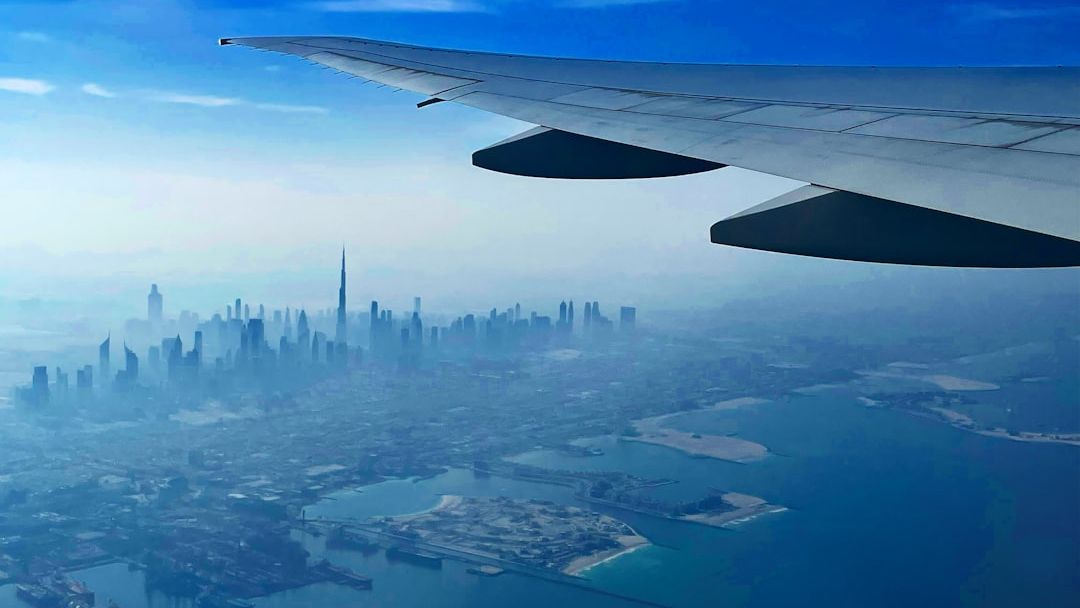
What Changed
Who It Affects
Renewed U.S.–Iran hostilities are disrupting Gulf aviation, affecting major hubs including Dubai, Doha, Abu Dhabi, Bahrain and Kuwait.
Gulf aviation is under renewed strain on 12 July 2026 as U.S.–Iran hostilities add fresh uncertainty to one of the world’s most important long-haul air corridors. The disruption affects the wider regional network around Qatar, Bahrain, Kuwait, Jordan and the UAE, with major carriers including Qatar Airways, Emirates, Etihad Airways and Gulf Air operating in a more fragile environment. While many services have resumed quickly after interruptions, travellers should not assume schedules are fully stable. The main risk is rolling disruption: airspace adjustments, rerouting, delayed aircraft, displaced crews and missed connections across busy hubs.
What Has Changed for Gulf Flights
The immediate change is not a single blanket shutdown, but a more volatile operating picture across the Gulf and surrounding airspace. Flight-tracking observations and regional security alerts point to increased pressure on airlines that rely on efficient east-west routings through the Middle East. For passengers, that can mean longer flight paths, late aircraft arrivals, short-notice retiming or a change in connection reliability. Airports such as Dubai, Abu Dhabi, Doha, Bahrain, Kuwait City and Amman may continue operating, but the wider network can still be affected if airlines need to avoid certain areas or reposition aircraft and crews.
Which Travellers Are Most Exposed
The travellers most exposed are those using the Gulf as a connection point rather than as a final destination. A passenger flying London to Bangkok via Doha, Manchester to Sydney via Dubai, Paris to Manila via Abu Dhabi or Cairo to India via Bahrain may be affected even if their origin and destination airports are far from the hostilities. Families with children, elderly passengers, cruise passengers and anyone with medical needs should be especially cautious about short layovers. Business travellers should also avoid building same-day meetings around a Gulf connection until schedules look consistently reliable.
Why Hub Connections Are Vulnerable
Gulf airlines are built around large hub banks, where hundreds of passengers arrive from one region and connect onward within a narrow time window. That model works extremely well when airspace is predictable, because aircraft can be sequenced tightly and passengers can transfer quickly. During security disruption, however, one rerouted or delayed long-haul flight can cause missed connections across multiple continents. Even if your own flight is not cancelled, your aircraft may be late arriving from another route affected by diversions, airspace restrictions or crew duty-time limits.
Practical tips
- Check your airline app and booking email twice daily: Gulf schedules can change quickly during regional security disruption, and the airline app is usually the fastest place to see retiming, rerouting, gate changes or cancellation notices.
- Avoid tight Gulf connections if you can still change your ticket: give yourself at least 3 to 4 hours between long-haul flights, and longer if you are travelling on separate tickets or need to collect bags and re-check them.
- Keep your routing flexible: if your trip is time-sensitive, compare alternatives via Istanbul, Athens, Vienna, Frankfurt, London, Singapore or other non-Gulf hubs, depending on your origin and destination.
- Read your travel insurance wording before departure: many policies exclude war, civil unrest or government airspace restrictions, so check whether delay, missed connection and abandonment cover applies to geopolitical disruption.
Mistakes to avoid
- ✕Mistake 1: Assuming a resumed flight schedule means the risk has passed. Flights may operate normally for several hours and then be retimed again if airspace, security or crew-positioning conditions change.
- ✕Mistake 2: Booking separate tickets through a Gulf hub to save money. If your first flight is delayed, the second airline may treat you as a no-show and refuse free rebooking.
- ✕Mistake 3: Expecting automatic compensation for every delay. Security-related disruption and hostilities may be treated as extraordinary circumstances, although refund, rerouting and care rights can still apply depending on the route and airline.
- ✕Mistake 4: Ignoring official travel advice. Airline updates tell you whether a flight is operating, but government advisories help you judge the wider security risk at your destination or transit point.
Quick checklist
- Confirm your flight status directly with the airline before leaving for the airport
- Check government travel advice for your destination and transit country
- Save airline, hotel, insurer and airport contact details offline
- Verify whether your ticket is protected as one through-booking or separate flights
- Have a backup route, extra funds and essential items in cabin baggage


